
Case study Equip
An AI career assistant for students who valued the Career Center but rarely used it.
A team project in DePaul's HCI program: a survey and eight interviews, four findings, and a hi-fi prototype built around goals, progress and a clear data policy.
- Type
- Mobile app concept
- Status
- Hi-fi prototype in Figma. Not shipped; not tested beyond the team.
- My role
- [exact contribution — to confirm]
- Team
- Four students, including me (names are on the brainstorm board). [roles — to confirm]
- Timeline
- [term and year — to confirm]
- Research
- Survey, 15 responses · 8 interviews
- Honest result
- A working prototype and a documented chain from findings to features. No outcomes were measured.
The uncertainty that mattered
We started with a broad brief: find a university service that would benefit from an AI assistant. We didn't know which one, or why students weren't already using what existed.
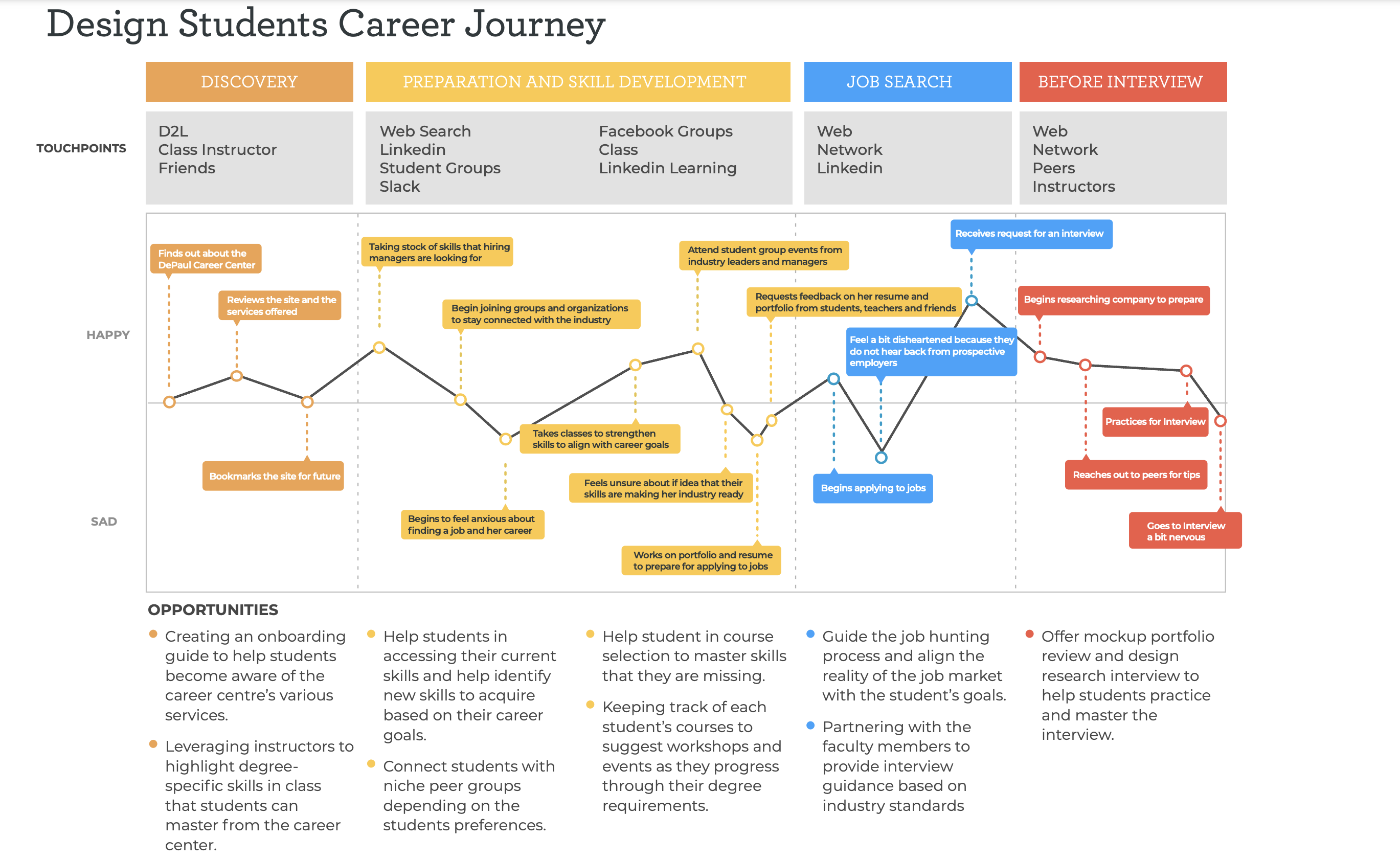
The people were students in DePaul's College of Computing and Digital Media. The early survey showed a gap worth designing for: most respondents said the Career Center's services were necessary and beneficial, but few had used them. That gap between valuing a service and using it became the project.
Constraints: [course length, team size, access to Career Center data — to confirm]. Success, as defined at the time: [course deliverables? — to confirm].
Evidence and what it answered
Survey: which service, and is it used?
Fifteen students answered four questions: which CDM services they knew of, which they'd used in the last year, which three they thought were most beneficial, and how services could improve.
Had used the Career Center
Said it was necessary and beneficial
Respondents: 66.7% experienced students, 26.7% mid-level, 6.7% new. With fifteen responses this pointed us at a problem; it did not measure it.
Interviews: why the gap?
Eight students (three men, five women; half experienced, a third mid-level, one new). We asked about their last contact with the Career Center, how they were building the skills they lacked, what one service they wished existed, how they heard about events, and what they thought of an intelligent assistant.
Four things came up again and again:
- Students need to trust the source of career advice.
- They want to see the personal relevance of a resource to their own goals.
- They need guidance for long-term goal-setting, and accountability for meeting those goals.
- They want to see the value of where they invest their time and energy.
"[I wish there were] events that were capped. Not because I think they should be exclusive, but because I think it's hard to get face time. I think [career fairs] should be organized in a way that's more segmented."
DePaul CDM HCI student, interview
What the evidence meant
Each finding became a "how might we" question. We kept them as questions rather than features so the brainstorm had somewhere to go.
- How might we help students navigate to the right resources for their specific goals?
- How might we supplement classes with career services that follow a student's path?
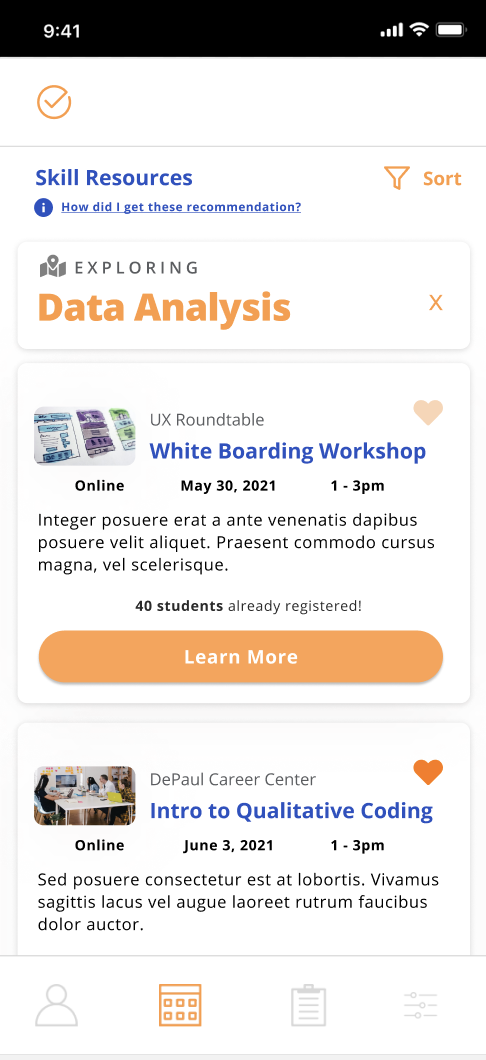
- How might we connect students to the Career Center through their skills, goals and interests?
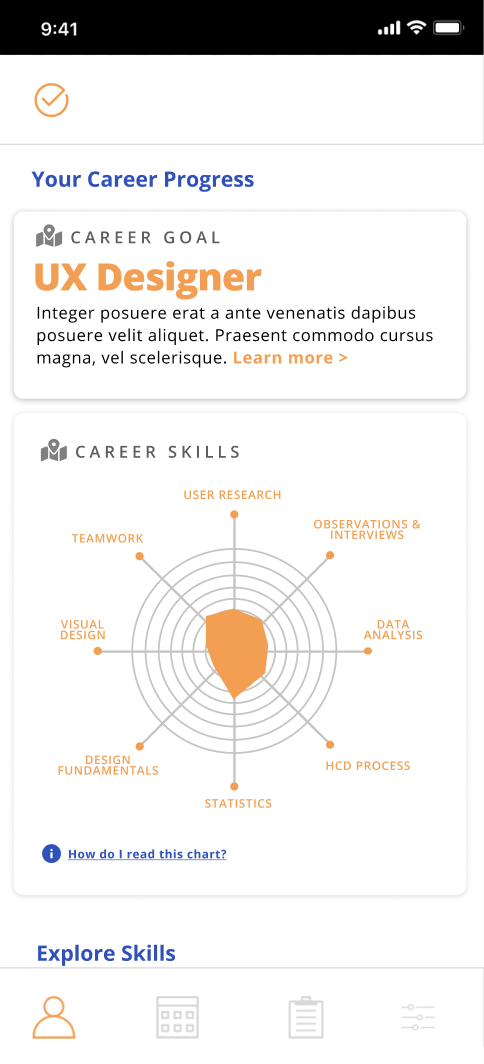
- How might we give students a place to track progress toward their career goals?
Evidence
Finding 1: students need to trust the source of career advice. Finding 3: they need long-term guidance and accountability.Decision
Three core features: skill tracking, personalised event suggestions, and a comprehensive data policy shown before anything personal is asked for.Limitation
The link from "trust" to "data policy" was our interpretation in the brainstorm. It was not tested with students.Decisions, and how the data policy grew
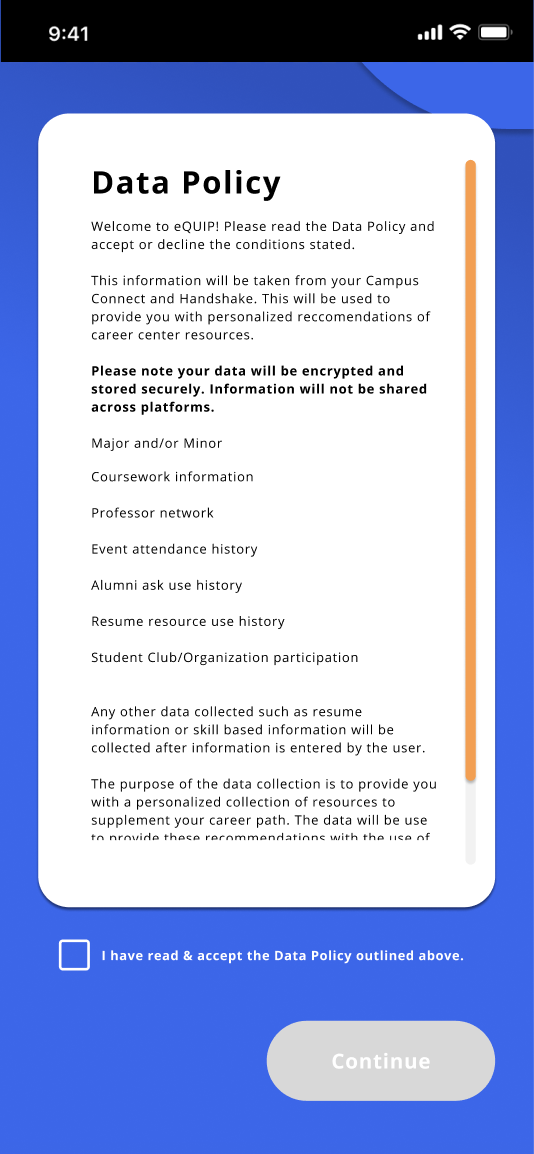
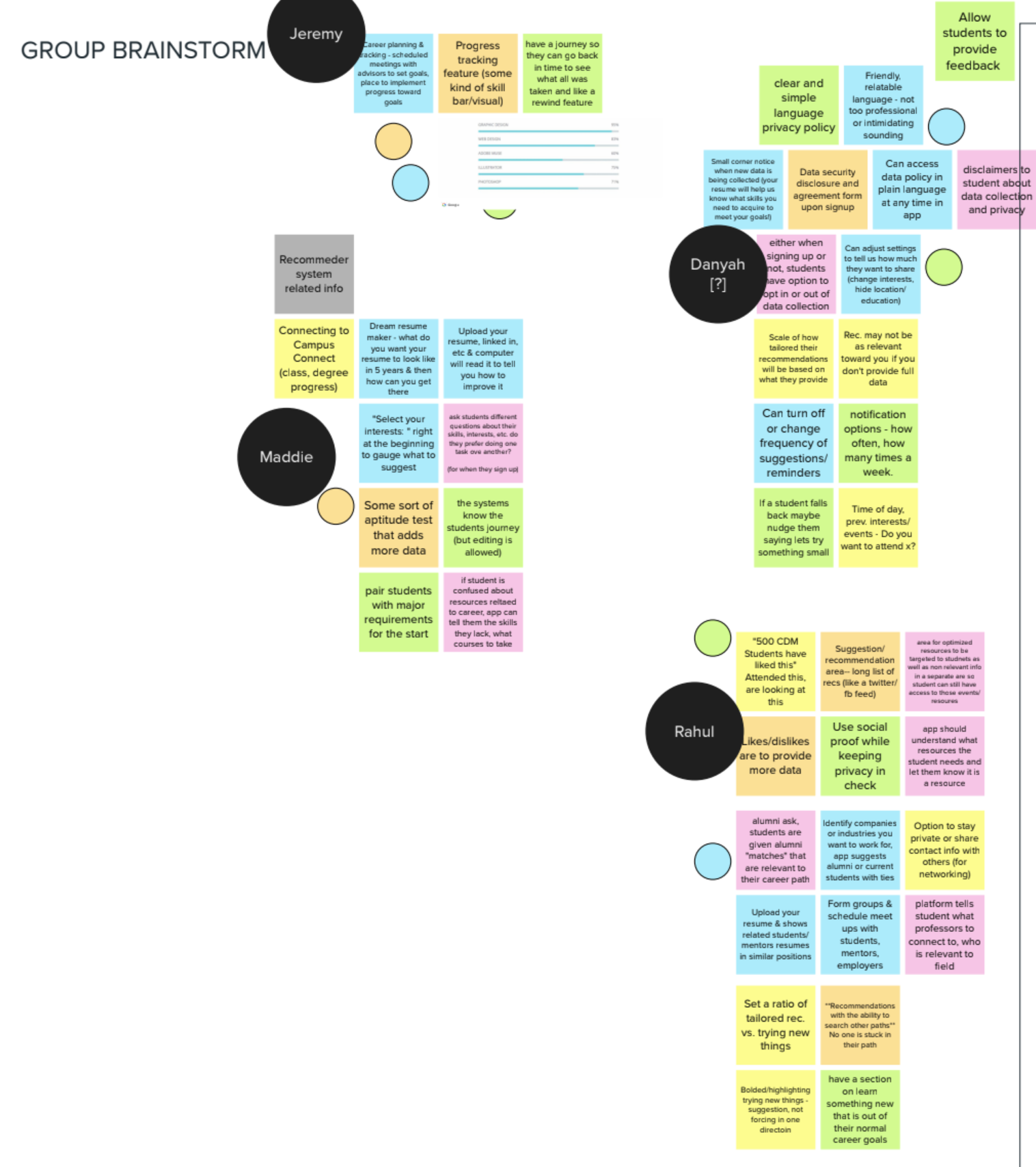
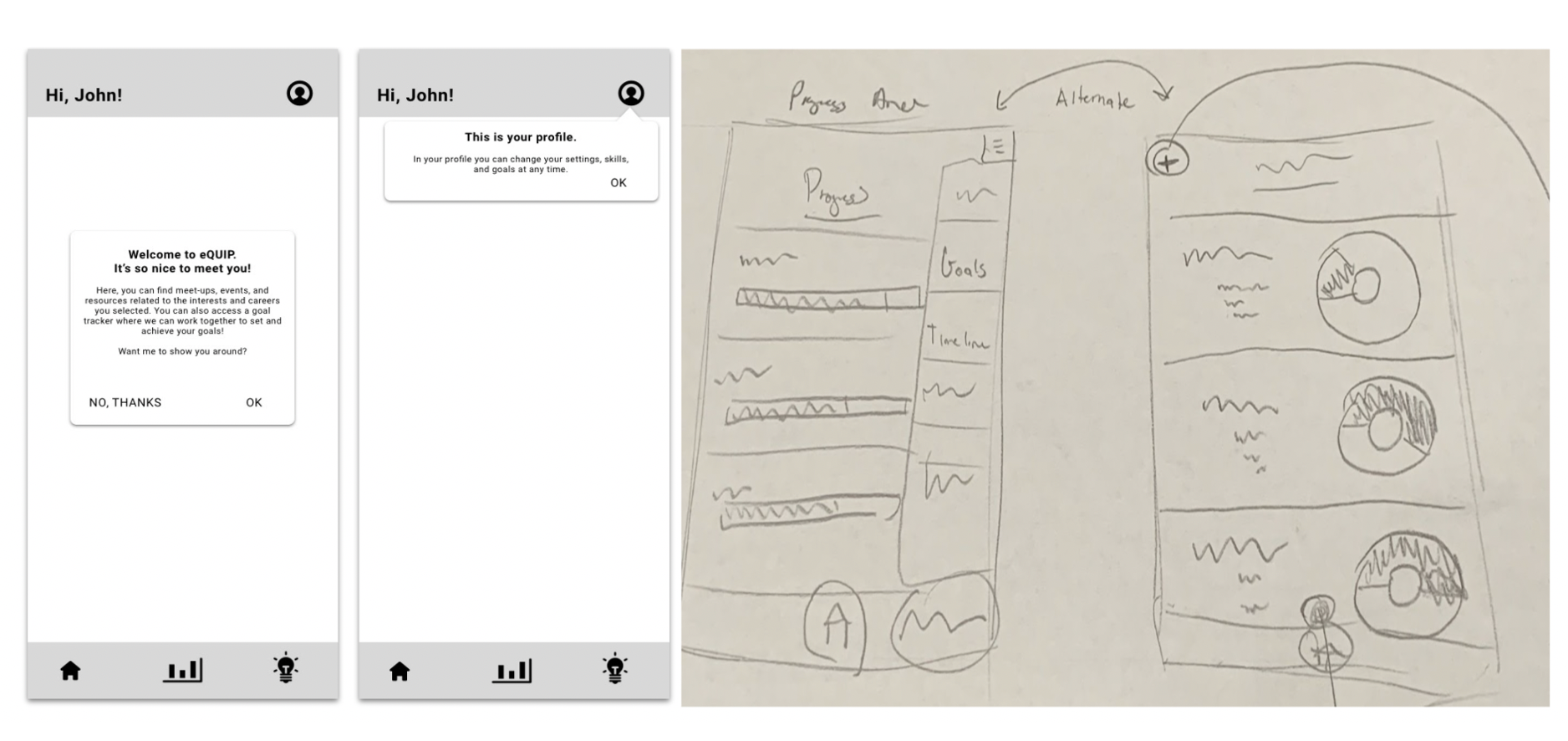
The group brainstorm turned the four questions into three features. The data policy was the one we debated most: an AI assistant that reads a student's academic record has to say so, up front, in plain words.
The data policy, earlier and revised
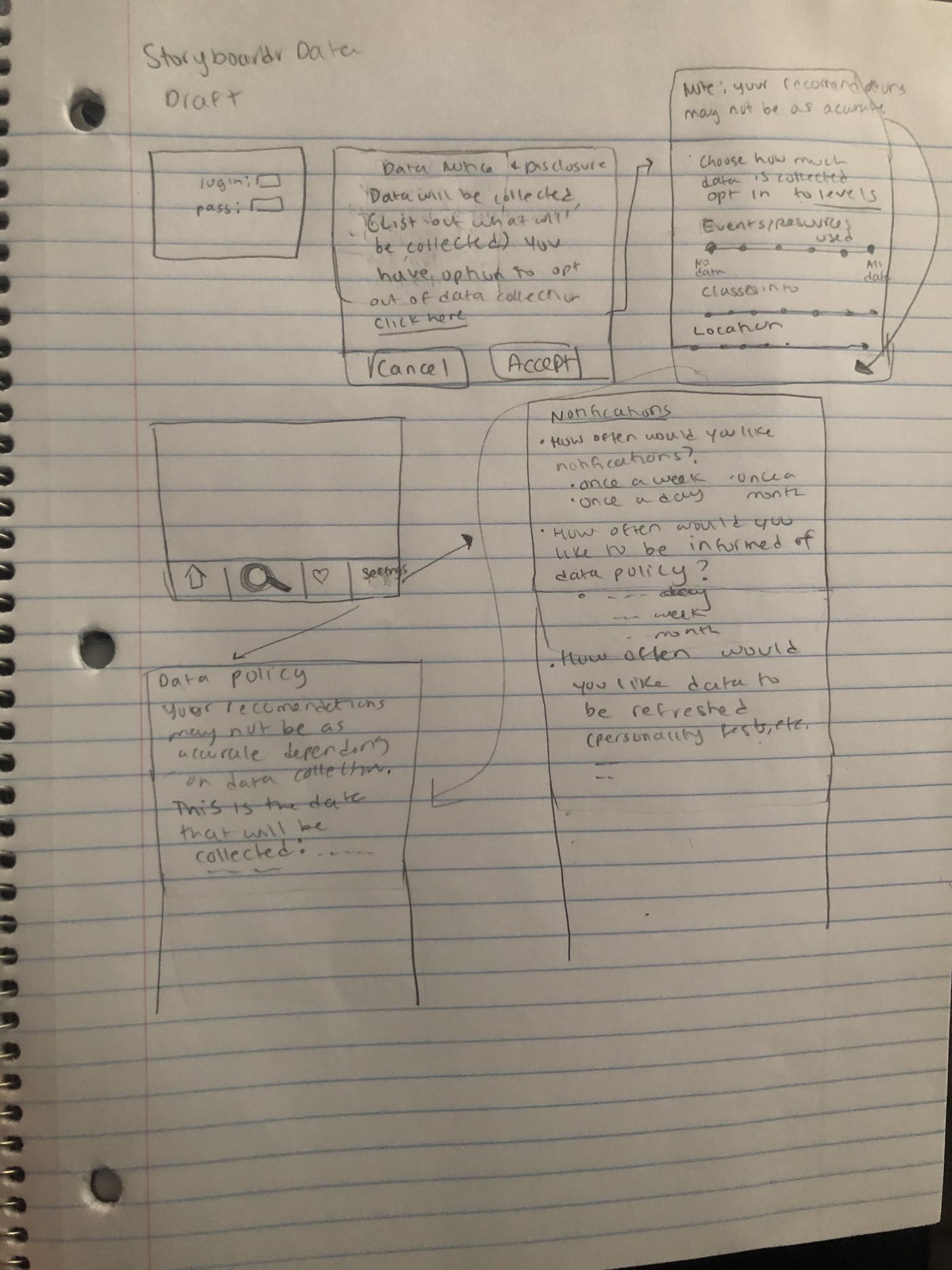
It began as a one-line note in the sketches and became the first screen a student sees. Compare the two states; the frame stays put.
[Rejected ideas or alternatives considered — to confirm, or state that none were documented]
Result, limits, next step
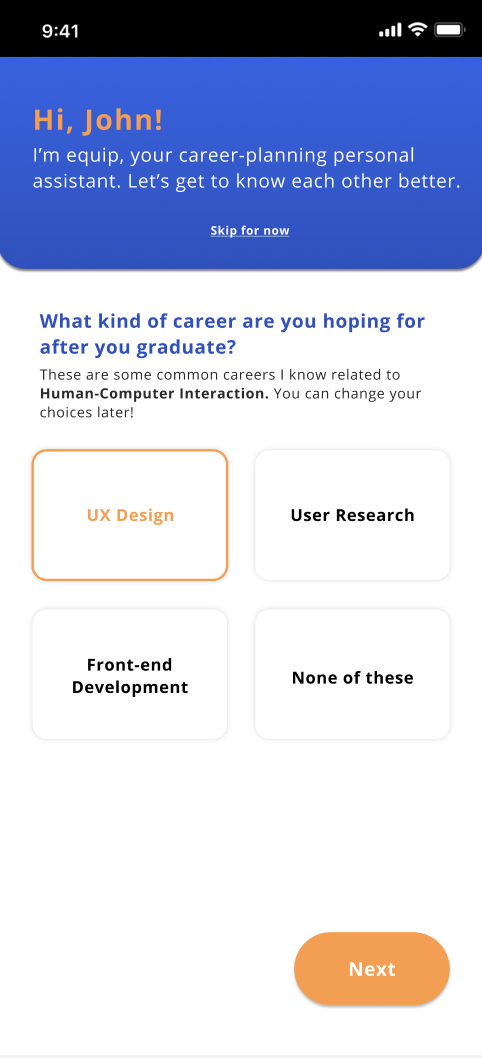
A hi-fi prototype with three main features: the data policy and onboarding, a progress page, and resource suggestions. Open the prototype in Figma.
Delivered
Survey, interviews, synthesis, brainstorm, lo-fi and hi-fi prototype. [course outcome — to confirm]Not measured
No usability test beyond the team; no adoption or satisfaction data. Nothing here claims the design works.Would test next
A usability session on onboarding and progress with five students: can they explain what data is used and why, and find a resource that fits a stated goal?Unresolved
Whether a transparent data policy actually increases trust, or only satisfies it. The finding says trust matters; the design assumes a policy builds it.Reflection
This was the first time I designed specifically for an AI-driven product. I learned how much of the experience is set by data ethics and data collection before any screen is drawn, and I enjoyed that part more than I expected. As automation and AI take over more of how software works, I want to design more products like this.
[What I would change or investigate next — one specific thing, Jeremy]